Starting
Every growing refinement found in current autos compels a comprehensive deep grasp of diagnostic tools, specifically touching on On-Board Diagnostics II (OBD2) and Tire Pressure Monitoring Platforms (TPMS). Among Europe, Asia, and the US, these technologies operate using different frequencies. OBD2 standards are largely consistent globally, chiefly utilizing ISO 9141-50, KWP2000, CAN, and others, but regional uses can cause minor divergences. TPMS, however, is where remarkable frequency contrasts emerge. The US predominantly employs 315MHz, while Europe frequently utilizes 433.92MHz, and Asia reveals a more dispersed range including both frequencies and alternative bands. Thus, precise diagnostic tools must be equipped with the capability to comprehend these plentiful frequencies to help effective maintenance and maintenance.
Unpacking TPMS Sensor Frequencies: A Global Guide (Europe, North America, Asia)
Knowing tire pressure monitoring system (TPMS) reader channels through the earth appears challenging. Customarily, North nations largely utilize 315 MHz, whereas some updated vehicles deploy 433 MHz. Nonetheless, Europe and most of Asia chiefly work on the 433 MHz frequency, with some country-specific variations appearing mainly in certain Asian zones. Thus, important to prove the true frequency leading up to securing TPMS receivers to make certain compatibility and sidestep probable issues.
Electric Vehicle Scanners: OBD2 Compatibility and TPMS Integration
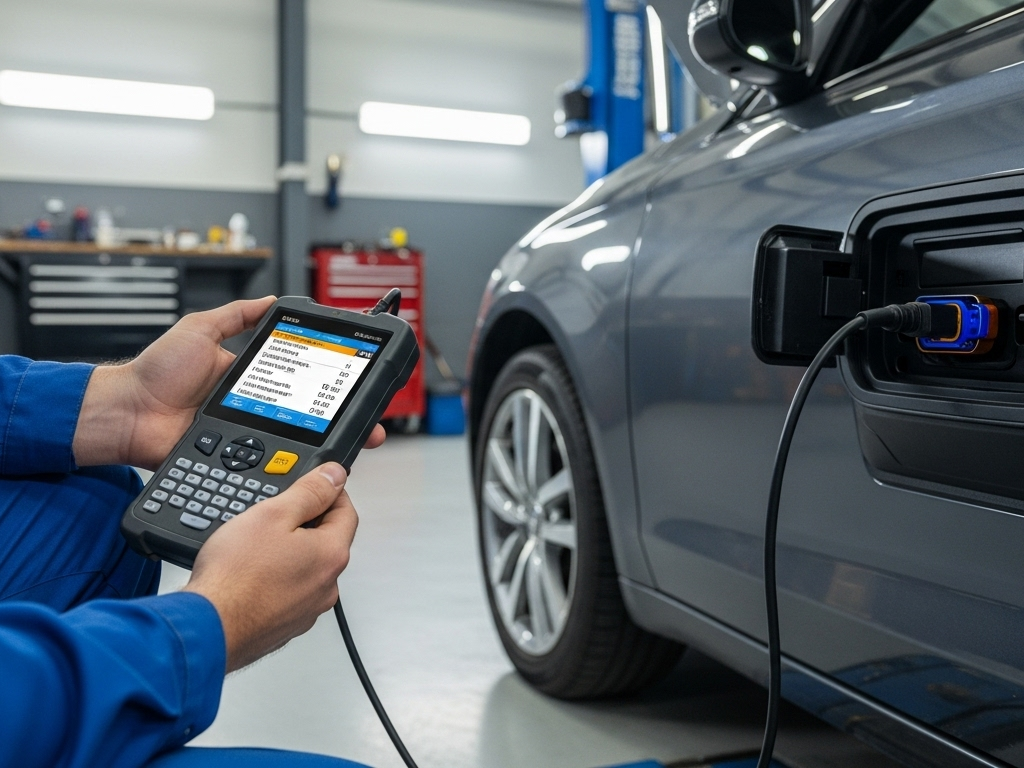
State-of-the-art electrical car inspection gadgets are increasingly blending critical functionality, notably concerning both conventional On-Board Diagnostics II (OBD2) interface and Tire Pressure Monitoring System (TPMS) connection. Countless renewable rides utilize OBD2 ports for accessing essential system data, empowering technicians and owners to discover potential shortcomings. Furthermore, seamless TPMS linking provides valid tire tension figures, helping to optimized security and combustion saving. This blend of OBD2 portability and TPMS functionality exemplifies a remarkable step in voltage-driven vehicle assessment.
Tire Pressure Frequency Differences: Eurasia vs. USA vs. Asia - A Thorough Evaluation
Numerous sensors responsible for observing tire force—TPMS—operate on distinct radio wavelengths, leading to considerable regional discrepancies. North America predominantly utilizes 315 MHz, though some modern vehicles are changing to 433 MHz. Eurozone mandates 433.92 MHz, a fixed frequency to guarantee consistency across territories. Far East exhibits a varied landscape, with certain countries using 315 MHz, others 433 MHz, and still varied regions employing a fusion of both. This distinction results in challenges for service points and vehicle owners when dealing with replacement TPMS modules or diagnostic apparatus, obliging careful inspection of regional guidelines to circumvent errors and establish proper working of the TPMS.
Vehicle Scanners for EV Vehicles: TPMS Readings & Frequency Interpretation
New vehicle tools are rapidly expanding to support electric vehicles, particularly pertaining to tire pressure monitoring analysis. Unlike internal combustion engine vehicles, EVs present exclusive hurdles when it comes to air pressure management verification. Many electric rides use variegated pressure monitoring units signals requiring the tool to accurately understand the transmission in use. This ability enables technicians to exclusively observe tire data but also pinpoint the unmistakable wavelength being sent by the tire monitoring probes, enabling in precise diagnosis of defects.
Asia Tire Monitoring Ranges: Which Wish to Comprehend?
Understanding the world of machine TPMS can be a difficulty, primarily due to the varying wavelengths utilized across The EU, Asia, and the United States. European Union’s vehicles predominantly use 433.92 MHz, while various Asian countries employ 315 MHz and 433.92 MHz, creating a troublesome situation for engineers. In the US, both 315 MHz and 433.92 MHz are prevalent, with 315 MHz being more dominant. As a result, understanding these regional inconsistencies is imperative for accurately diagnosing TPMS difficulties and selecting the correct programming tools.
Progressing a Key Concepts: Vehicle Diagnostics, Renewable-Powered Autos, in addition to Pressure Detection Module Signal Differentiation
As expert auto experts, plainly grasping certain fundamentals pertaining to OBD2, electrified transport technology, together with pressure monitoring systems unit transmission observing entails some fundamental subsequent phase. The latter topics extend throughout initial troubleshooting, involving exclusive gear and ability allowing precisely locate in addition to remedy advanced issues involving tyre performance, volt configuration productivity, or electric motor fault alerts. In addition, appropriately diagnosing pressure detection sensor frequencies – that are differ for specific brands even trim levels – often necessary for proper synchronization.
Battery Car Troubleshooting: Using OBD2 Scanners to Troubleshoot TPMS
Fixing Tire Pressure Monitoring Systems tire monitoring in electric vehicles battery vehicles often involves more than simply visual inspection. Modern OBD2 diagnostic tools offer the ability to access TPMS data and diagnose potential errors. Utilizing these machines, technicians can assess fault codes, inspect sensor performance, and even perform sensor tests, allowing for robust diagnosis of monitoring abnormalities and minimizing service disruption. These is especially necessary given the growing complexity of EV systems.
Comprehending Tire Pressure Monitoring Systems Waves: A Practical Briefing for European Region, Asia-Pacific, and the Continent
Successfully running tire surveillance systems throughout Europe, Asian Continent, and North American Zone demands a sufficient familiarity of the different spectrum allocations they apply. Distinct from a even system, the world generally conforms to specific spectrum allocations. Example being Continental Europe over-the-air verification primarily utilizes 315 Megahertz and 433 million nine hundred twenty kHz, while North American Region commonly depends on 315 Megahertz though a few modern cars would incorporate 433.92 MHz band. Asia shows a more intricate picture, with many bandwidths operated, depending on the territory and machine builder.
- Think about local legislations regarding TPMS frequency.
- View your automobile manual for specific frequency.
- Use a pressure detecting scanner capable of reading diverse signals.