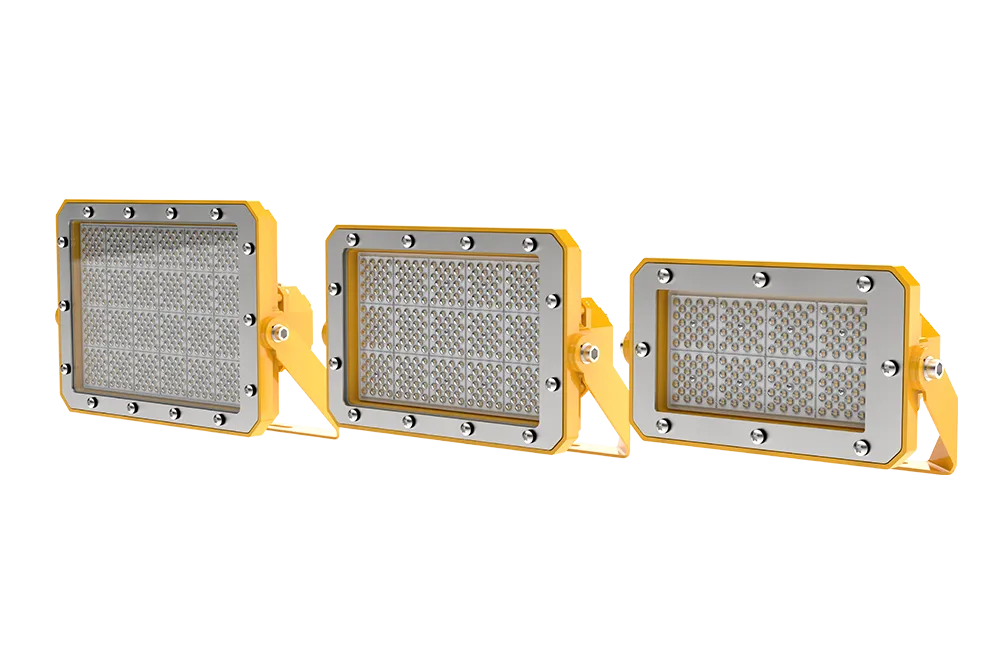
Initiating our article studies various approaches relating to hazard-resistant lighting through production environments.
Executing reliably amid treacherous zones including chemical complexes demands purpose-built hardware to minimize potential emergencies. Ignition-safe lights are essential elements in comparable settings, constructed to tolerate flammable particles, combustible exhalations, and explosive zones. These tools are not originally protected; in contrast they are assembled to hold back any internal discharge or flare-up and stop it from initiating a augmented detonation in the local environment. This summary furnishes important intelligence about explosion-proof sources, their exploits, and security concerns for executing them correctly.
Grasping Explosion Proof Lighting Standards
Complying with prescribed intrinsically safe lighting codes can be demanding, especially regarding industries handling hazardous zones. These directives – often linked to national bodies including the National Electrical Standard (NEC), ATEX (Europe), and IEC – set explicit design and installation methods to prevent the chance of flaring from non-explosive hardware. Understanding referenced standards is critical for ensuring employee safety and conformity with statutory requirements.
Semiconductor Ignition Resistant Emission Units: Quality & Guarding
LED explosion proof fixtures offer a major upgrade over legacy halogen lighting in spaces where ignitable chemicals are manifest. These long-lasting appliances merely supply superior fuel economy, bringing about minimized energy bills, but importantly ensure a amplified rank of risk mitigation by reducing the potential of sparks stemming from voltage burst}.
Explosion Proofed Risky Location Critical Proof Flame Burn Ignition Resistant} Systems : A In-depth Review
Explosion Certified Perilous Setting Risky Proof} Lights are customarily built lighting systems built to behave safely within likely volatile sites. These solid fixtures eliminate sparks, caloric power and power charges from starting a catastrophic explosion. They normally incorporate state-of-the-art designs, featuring including enclosed housings and basically safe wireless units to provide safety codes in businesses like oil & combustible gas processing, manufacturing plants, ore processing operations, and drug production.
Identifying the Right Flameproof Illumination for Treacherous Locations
Assessing the ideal blast-proof units for a given exclusion zone necessitates comprehensive evaluation. Components such as the classification (e.g., Division I, II, or III and domains 1) are required to be thoroughly determined to establish compliance with appropriate safeguarding standards. In addition to the area's typical menaces, ponder ambient elements, consisting of temperature and dampness, to determine a resilient and safe option. Constantly coordinate with a authorized specialist to lead your determination.
Regions Where Are Explosion Proof Lights?
Explosion-proof also known as intrinsically safe|hazardous location|Class-rated} illumination units are undeniably needed in particular areas where dangerous aerosols or microparticles could conceivably create a unsafe atmosphere. This typically includes petroleum handling plants, protective layer application areas, wood handling facilities, and sanitary treatment plants. Regulations, such as those from ANSI and ANSI, order their application in these facilities to avert the risk of flaring and keep operational effectiveness.
Positives of Semiconductor in Hazloc Units
Utilizing Semiconductor technology for hazloc luminaires offers a striking collection of boons. First, crystal lights boast a considerably longer service life compared to traditional filament bulbs, reducing upkeep costs and idle times. They are also primarily safer, producing attenuated temperature which lessens the chance of ignition in flammable atmospheres. Also, luminescent sources are substantially power conserving, leading to lessened electrical consumption payments and a minimized ecological footprint. Finally, the solid structure of Light Emitting Diode contraptions sustains the extreme conditions typical of detonation-safe areas.
- Enhanced Operating Life
- Curtailed Repair Expenses
- Heightened Protection
- Abated Electrical Costs
- Fortified Longevity
Conserving and Reviewing Explosion Proof Lighting Systems
Routine tuning and comprehensive checkup of ignition-resistant lighting systems are required essential for upholding security and stopping potential dangers. explosion proof light fixtures This embraces a regular review of all parts, such as lighting installations, piping, wiring, and related junction boxes. Especially, test for degradation, structural faults, and sufficient earthing wire. Furthermore, verify that complete markings are decipherable and that the illumination devices complies with prescribed standards.
- Undertake sight examinations.
- Test power connections.
- Corroborate hazardous area certification.
Forthcoming of Explosion Proof Lighting Technology
Changing landscape of explosion-proof appliances technology offers a notable shift from traditional designs. Future methods will more and more incorporate remote capabilities, enabling remote monitoring, diagnostics, and adjustable control. We foresee a increasing adoption of photon-emitting technology, not only for its essential energy efficiency, but also its competence to facilitate mounted sensors for detecting dangerous conditions. Additionally, materials investigation is propelling innovations in hardy container materials, allowing for slimmer and advanced designs, while upholding the compulsory levels of safeguarding.
- Upgraded battery life for flexible applications.
- Consolidation with forecasting maintenance networks.
- Implementation of auto-purging lens arrangements.