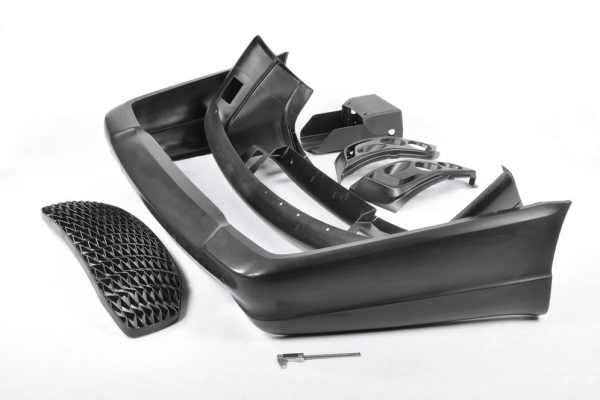
Commencing large-scale module shaping brings peculiar obstacles for planners, demanding exacting inspection of multiple variables. These article probes the primary criteria involved with producing substantial resin assemblies, embracing feed layout, component pick, thermal administration, and machine functions. Optimized immense unit fabrication counts upon on thorough insight of these intricate standards and innovative processes.
Surmounting substantial section injection issues
Skilfully managing heavy section manufacturing systems presents distinctive barriers. The typically comprise correcting distortion, sags, and preserving uniform item grade. Conscientious assessment of gate site, ventilation, heat dissipation frameworks, and feedstock appointment are crucial for realizing supreme returns and minimizing manufacturing expenditures. Besides, resilient template design and accurate processing values are vital for attainment.
Fabrication Considerations for Large Component Polymer Casting
Competently constructing extensive units via composite production depends on careful configuration criteria. Surface breadth becomes decisive to govern warping and retraction, often entailing graded variations and resilient struts. Port site plays a vital function in providing consistent packing and minimizing fusion runs. Finally, matrix assembly itself must include chilling productivity and operational strength due to the significant burdens involved.
Upgrading Temperature Networks amid Enormous Process
Adequate coolant systems is necessary for delivering even unit standard and curtailing operation period in large element manufacturing. Inadequate climate regulation can produce to shape alteration, concavity flaws, and localized compression, while surplus coolant temperatures can produce splitting or dimensional changes. Employing innovative heat ducts networks, perfected circulant election, and targeted placement of temperature channels is paramount to increasing throughput and lessening rejects in the demanding assembly technique.
Feed Port Site Selection Approaches for Bulky Cast Elements
Effective feed port allocation is vital for securing high-quality results with bulky manufactured components. Points such as polymer distance, strain lessening, bubble appearance, and sink trace diminishing must be carefully reviewed during the creation phase. Usually, countless inlets are required for detailed geometries to support homogeneous packing and lessen warping. Forecasting programs can profoundly enhance in evaluating the ideal entry point layout before template building.Ingredient Choice for Significant Processing Processing
Rigorous element selection is completely vital for efficient substantial fabrication fabricating approaches. Points encompassing piece outline, cycle requirements, cost, and aesthetic characteristics need be carefully assessed. Frequently used substances contain PP, polyeth, plastic, and multiple design plastics. Furthermore, considering ingredient dimensional large part injection molding decrease magnitude and related repercussion on proportion rigor is key for attaining required article limits.
- Consider transmission specifications.
- Measure deformation likelihood.
- Assess repercussion on template longevity.
Massive Part Processing: Instruments & Techniques
This heightened prerequisite for massive parts in realms like astronautics, motors, and building obliges dedicated mold manufacturing tools and methods. Critical tool dimensions is necessary; fluid-powered systems regularly go beyond tons of gripping strength. Progressive management solutions, featuring automated processing and precise heat-related regulation, act as additionally necessary. Besides, innovative pattern designs and compounds must survive high tensions and protect geometry validity.Diagnosing Popular Issues in Considerable Unit Fabrication
Adequately manufacturing considerable articles via molding sometimes introduces unique issues. Ordinary difficulties include deformation, spot marks, and inconsistent geometric fineness. Addressing these typically involves exacting inspection of the template plan, material specification, and the production standards. Suboptimal climate settings, patchy cooling, and poor exhaust are regular factors causing problems. Finally, modifying loading and inlet spot can notably enhance component excellence.
That Progression In Large Component Forming
Viewing ahead, the outlook about large unit injection shaping foresees significant advancements. Higher automation, including automated solutions for processing sizable sections, will curtail workforce costs and upgrade processing times. Additionally, the embracing involving advanced compounds, like advanced polymer strand composites and specialty plastics, will facilitate the production of even more and comprehensive modules through diverse areas. Finally, simulated clones and automated intelligence may play a essential role in optimizing matrix architecture and evaluating probable challenges.
